
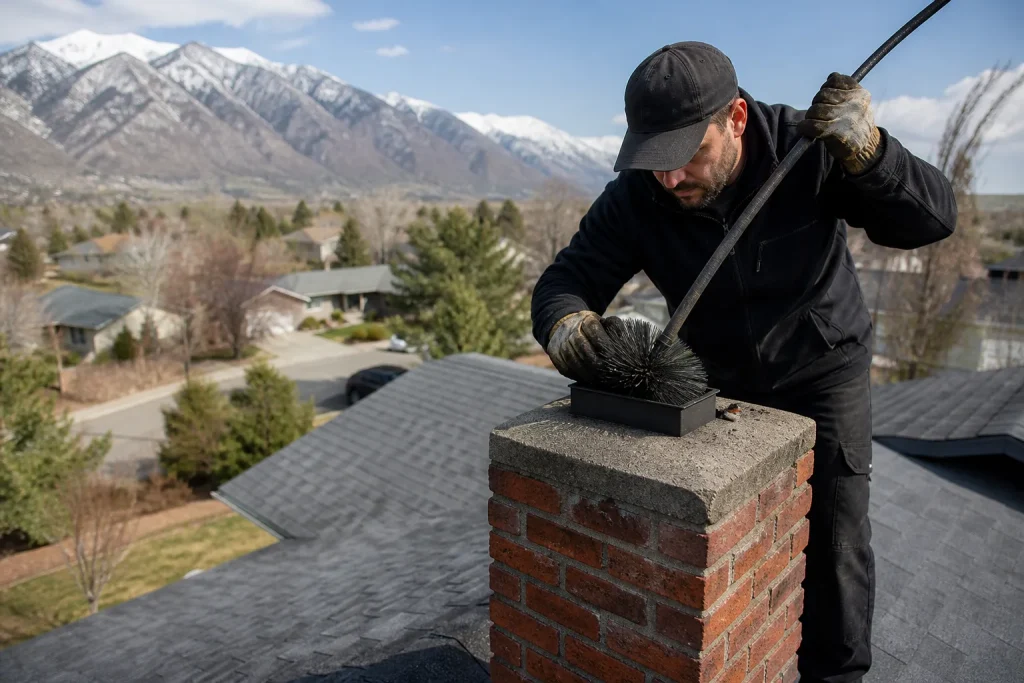
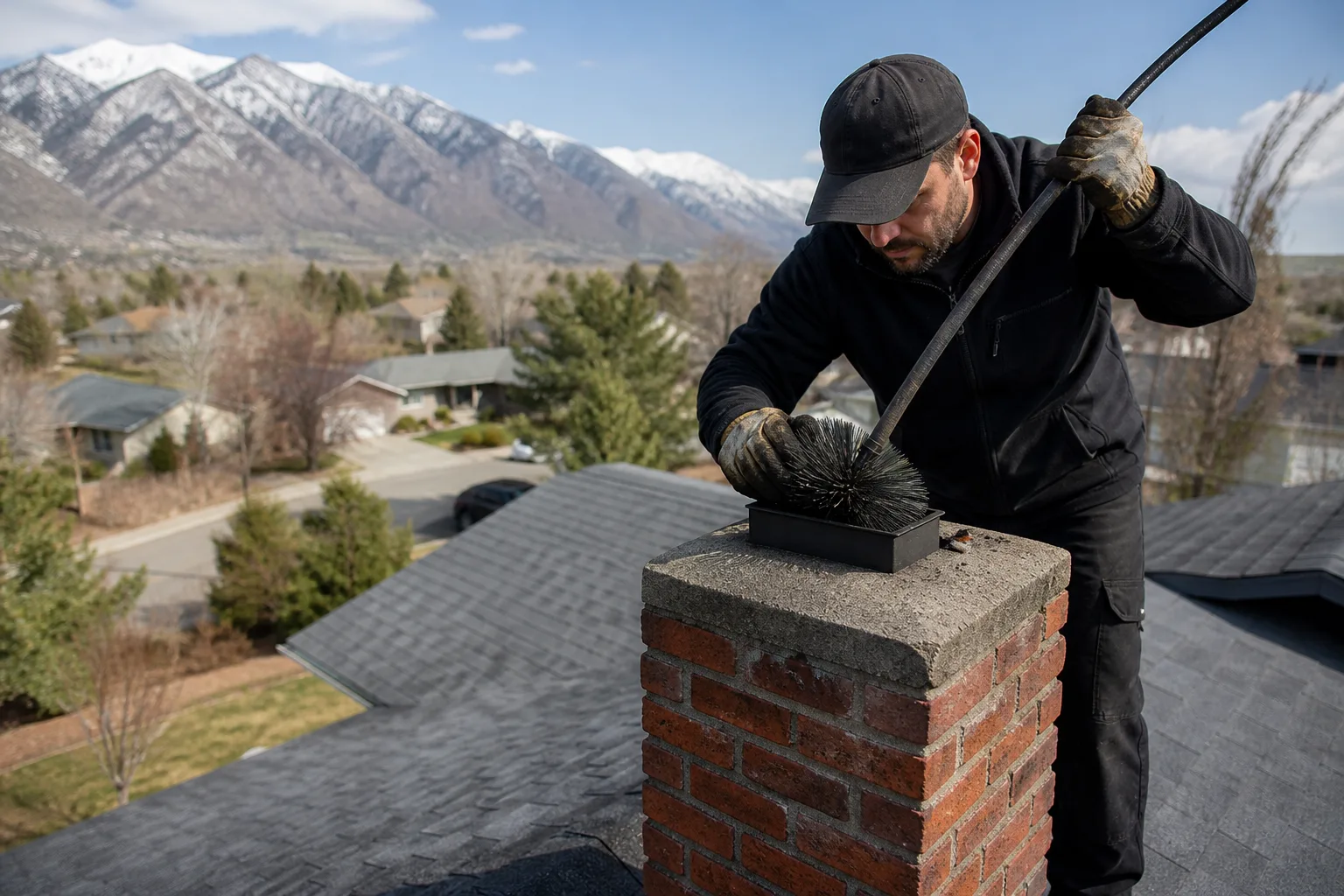
Emergency Chimney Sweep Near Me: What Springville Homeowners Should Do First
That’s the whole point. A chimney fire can burn at over 2,000°F inside your flue and be over before a truck arrives – what you do in the first few minutes matters more than how fast you dial. Most Springville homeowners reach for the phone before they’ve done the three things that actually reduce risk in the next half hour.
Key Takeaways
- Close the damper and starve a chimney fire of air; open it and get everyone out if you’re facing a blocked flue or heavy smoke that won’t clear.
- Learn the difference between a roaring fire, thick creosote smoke, and a choked flue – each one calls for a different move.
- Never relight until a camera inspection confirms the liner is intact, even after the smoke has cleared.
- “Emergency sweep” is a booking, not a siren. What you get is a same-visit inspection with photos you can see for yourself.
- Call (888) 469-8196 for a free estimate. We answer 24/7, and the price is set per job by a written estimate.
What counts as a chimney emergency in Springville?
A chimney emergency is any event where fire, heat, or smoke has escaped its intended path, or where a blocked flue is pushing carbon monoxide back into the house. A roaring sound from the flue, visible sparks at the cap, or a hot-to-the-touch chimney wall all count. A living room that won’t clear of smoke after you’ve opened a window counts too.
Here in Springville, the trigger is usually seasonal. Dry, cold Utah Valley air, tight modern construction that doesn’t draft well, and a stack of cured wood that’s been sitting on a pallet since autumn – those three things combine into a healthy creosote load faster than most people expect. When the weather finally turns and the fireplace gets lit for the first time in months, that’s when the call comes in.
What doesn’t count: a faint smoky smell on the first cold morning, or a struggling draft that clears once the flue warms up. Those are worth a look, but they aren’t an emergency. What does count is when the smoke has nowhere to go and the house is filling up.
What should you do in the first 30 minutes?
Your job in the first few minutes is to either starve the fire or get people out, and to know which one applies. Here’s the triage we’d walk any Springville homeowner through.
- Get everyone outside if you see flames or thick smoke escaping into the room. Call 911 from outside. Do not go back in for anything.
- If you suspect a chimney fire but the room is clear: close the damper to cut off oxygen. This is the opposite of the instinct to open it “so it can breathe.”
- If the house is filling with smoke and you can’t tell why: open the damper fully, open a window nearby to give the smoke a path, and if it doesn’t clear within a couple of minutes, get out and call 911.
- Shut off any gas fireplace or insert immediately if you have one, and don’t restart it until someone qualified has looked at it.
- Watch the chimney exterior from outside. Sparks, glowing mortar joints, or a wall that’s too hot to touch means the fire has moved into the structure. Call 911 now.
That’s the triage. It doesn’t take long, and it’s the part that actually matters.
Chimney fire, creosote smoke, or blocked flue: how do you tell the difference?
Each of these produces a different set of symptoms, and each one calls for different immediate action. Here’s the shorthand:
- Chimney fire: a deep roaring or rumbling sound from the flue, a smell like hot metal, visible sparks rising from the chimney cap, or a chimney wall that’s unusually hot. Close the damper. Get out and call 911.
- Heavy creosote smoke: thick, dark, acrid smoke rolling into the room with a tar-like smell. This happens when creosote has built up in the flue and is burning off or has ignited. Treat it as a chimney fire until someone qualified tells you otherwise; close the damper and call 911 if the smoke doesn’t clear quickly.
- Blocked flue: a fireplace that won’t draw at all, smoke that reverses into the room as soon as you light, or a furnace that keeps shutting off. This is more dangerous than it looks because carbon monoxide has nowhere to go. Open the damper, open a window, and stop using it until it’s inspected.
If you’re honestly not sure which one you’re looking at, assume it’s the worst case. A call to 911 that turns out to be heavy smoke is a much better outcome than the alternative.
What does “emergency chimney sweep” actually mean?
An emergency chimney sweep means a same-day sweep, inspection, and photo report, not a midnight dispatch. In practice, “emergency” here means a booking and a thorough look, not a siren and a truck screaming down the street. Nobody sweeps a chimney at 2am.
If a fire has happened, the sweep’s job on that visit is to look for evidence of heat damage, check the liner and the firebox, and document what’s found with photos you can see for yourself. It’s not to certify the full system is safe forever, and it’s not to prescribe a liner replacement before anyone has actually inspected the flue. A camera inspection and a written report is what a same-visit inspection can honestly provide. Anything more requires a follow-up.
Our technicians have up to 12 years of experience, and every one of them works with professional-grade brands like DuraFlex for flexible flue relining when a liner genuinely needs replacing. But the inspection comes first. We inspect before we recommend.
Why you shouldn’t relight the fireplace after a chimney fire
Even after the smoke has cleared and the chimney feels fine to the hand, don’t relight until a camera inspection confirms the liner is intact. Heat stress can crack flue tiles in ways you can’t see from the firebox. Those cracks let combustion gases straight into the walls and attic, and carbon monoxide doesn’t announce itself.
This is the step Springville homeowners are most tempted to skip. The house smells normal, the firebox looks the same as it did last week, and it’s cold outside. But a flue that has survived a chimney fire can still be failing, and relighting it means putting hundreds of degrees back into a compromised liner. The safe move is to have a professional camera-inspect the flue first, and until that’s done, treat the fireplace as off-limits.
If the inspection turns up spalled or missing tile, the answer isn’t necessarily a full teardown. HeatShield resurfacing restores deteriorated flue tiles from the inside, which is often a lower-impact option than rebuilding. And if it turns out the liner just needs to be replaced, a DuraFlex flexible liner is what most professional sweeps specify for the job.
What should you tell your insurance adjuster?
Call your insurer as soon as the fire is out and everyone’s safe, before you clean anything, and describe what happened in plain terms: what you saw, what you heard, and roughly how long the event lasted. Insurance companies are used to chimney fires, and they respond well to clear details.
After a chimney fire, a certified sweep can provide documentation that most adjusters ask for:
- Photos of the flue interior and any damaged components.
- A written report describing the extent of the damage.
- An estimate for recommended repair work, broken down by line item.
Having a formal chimney inspection on file satisfies the documented safety step the NFPA recommends before each burning season, and it gives the adjuster something concrete to work with. If the recommendation involves cap and crown work, brands like Gelco and Famco make components that hold up to Utah Valley’s freeze-thaw cycles, and a sweep will usually specify those explicitly in the report. Copperfield and Olympia Chimney are two more professional supply networks sweeps pull from. Ask for the inspection to include photos. You’re paying for the documentation as much as the sweep.
Can you sweep the chimney yourself after a fire?
No. Not after a chimney fire. The flue liner may be damaged in ways a brush won’t reveal, and a brush doesn’t tell you whether the flue is structurally sound. A sweep is a cleaning, not an inspection. If the question is whether the flue is safe to use, that’s a camera job.
A routine annual sweep between burning seasons is often within reach for a careful homeowner with the right tools, but the moment there’s heat damage, a crack, or visible evidence of a chimney fire, the diagnostics need a professional. The work isn’t glamorous, but it’s honest. We’d rather tell a Springville homeowner “that can safely wait until spring” than sell a liner they don’t need yet.
Related services in Springville
If the inspection turns up a firebox or damper problem, fireplace repair covers the firebox, damper, and surrounding masonry. If there’s structural damage to the chimney itself, chimney repair handles mortar joints, crown repair, and rebuilding as needed. And for routine maintenance before next burning season, a chimney sweep with a camera inspection keeps the whole system safe. To learn about everything we cover, visit Chimney Sweep Springville.
What happens when you call
- 1
A real person answersNo phone trees – you reach a local pro.
- 2
You get an upfront price rangeHonest numbers before anyone is dispatched.
- 3
A background-checked tech heads outLicensed & insured, dispatched right away.
- 4
You approve before work beginsNothing starts until you say go.
When to call a pro
Call a professional sweep if any of the following is true:
- You’ve had a chimney fire, even a small one you think went out on its own.
- The fireplace has stopped drawing or smoke reverses into the room.
- You’re seeing cracked flue tiles through the firebox opening.
- You’ve had heavy creosote buildup and the flue hasn’t been swept this season.
- A carbon monoxide detector has gone off, even briefly.
If any of those applies, or if you’re simply not sure what happened, book a sweep. It’s the honest answer.
The Bottom Line
When something goes wrong with the chimney, buying time with the right decisions matters more than dialing fast. Close the damper and starve the fire, or open it and get out – and never relight until a camera inspection says it’s safe.
We’re a full-service chimney specialist covering the whole arc from routine cleaning through chimney sweep follow-ups, inspections, and cap and crown replacement. Every job is done with professional brands like DuraFlex and HeatShield where the repair calls for it, and a written estimate sets the price before any work starts. If you’re in Springville and need help, Chimney Sweep Springville offers free estimates – call (888) 469-8196. We answer 24/7. Fast dispatch from 7am to 7pm, Sunday through Friday.
Frequently Asked Questions
A chimney sweep and inspection in Springville typically costs $150 – $300 depending on flue condition, access, and whether a camera inspection is included. The written estimate sets the final price, and it’s agreed before any work starts. Call (888) 469-8196 for an exact quote – estimates are free.
Not always. Only a camera inspection can tell you whether the existing liner survived the heat, and nothing should be recommended until that inspection is done and you’ve seen the photos yourself. Many flues need resurfacing with HeatShield rather than full liner replacement. If a new liner is the honest answer, a DuraFlex flexible liner is the option we specify. Call (888) 469-8196 to book an inspection.
Once a year for most wood-burning fireplaces, and more often if you burn frequently or use unseasoned wood. The NFPA recommends an inspection before each burning season. Springville’s dry climate and cold winters make an annual sweep a reasonable baseline. Call (888) 469-8196 to book one before winter.
Creosote keeps building up in the flue, and once it ignites it can damage the liner and crack the flue tiles. In the worst cases, combustion gases and carbon monoxide can pass through cracks into the home. That’s the risk, and it’s real. Call (888) 469-8196 for a free estimate – an annual sweep is the safe baseline.
Written by the team at Chimney Sweep Springville.
Need Chimney Cleaning Help?
Call Chimney Sweep Springville - the local pro we connect you with is licensed and insured, here with fast help in Springville.
(888) 469-8196